Second Take: Publishing and Print
The Month Print Came Back to Life
Print is growing inside Elkwood while the wider industry shrinks, because our papers behave like community noticeboards instead of content feeds. Six million daily readers is the receipt. This month we show our working, one floor at a time.

Second Take · Day 1 · November 1, 2026
The Month Print Came Back to Life
Thirty stories in thirty days. We open the month with the object the industry keeps burying and readers keep rescuing, the printed page, and the five Elkwood newsrooms that never stopped setting it.
Print is growing inside Elkwood while the wider industry shrinks, because our papers behave like community noticeboards instead of content feeds. Six million daily readers is the receipt. This month we show our working, one floor at a time.
- Elkwood runs five UK publications that treat readers as neighbours, not traffic.
- Six million daily readers make print our loudest growth story, not our charity case.
- Every Second Take story this month shows its numbers, its floor and its sources.
1. A chair, a paper, a pink interruption
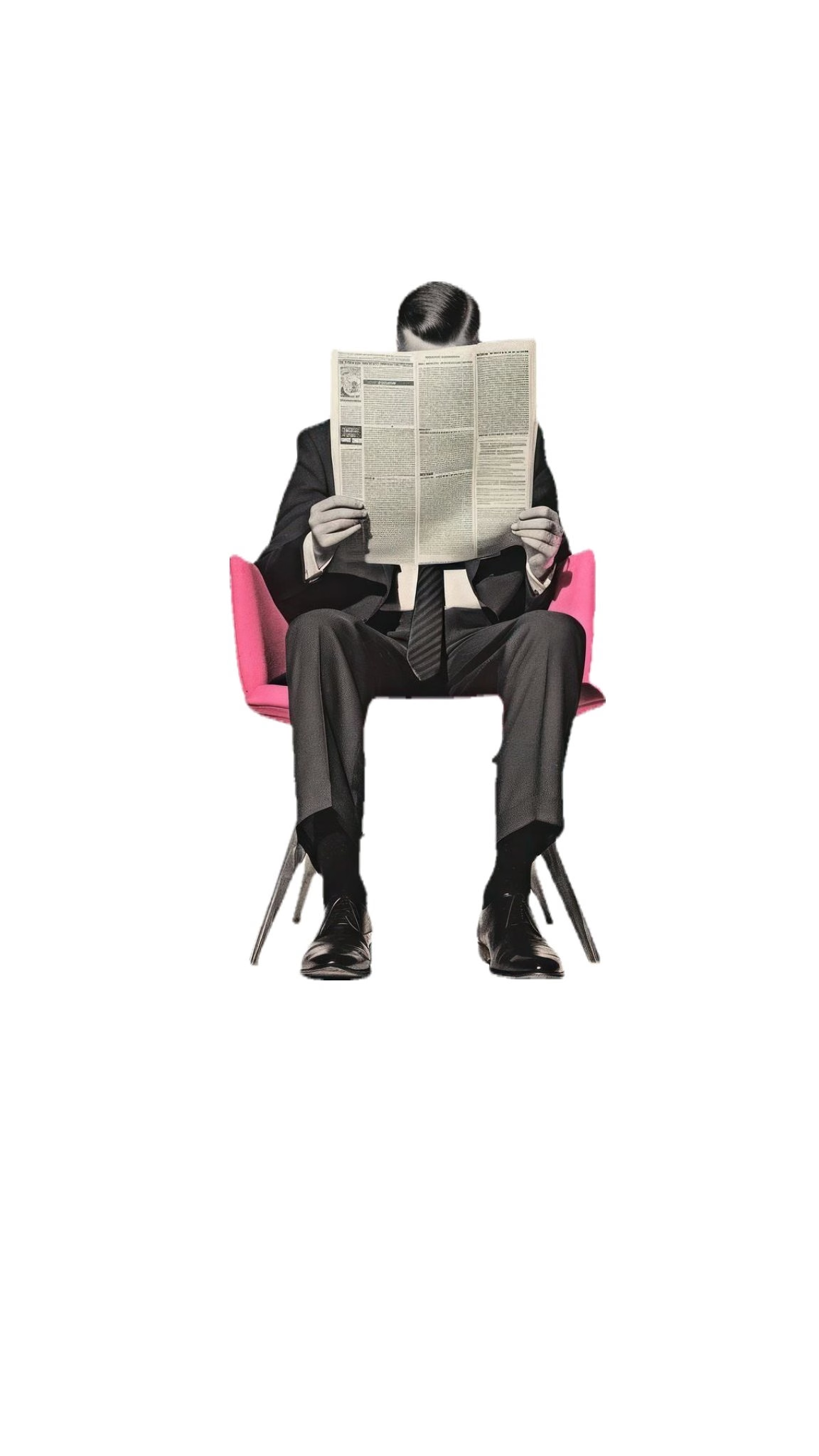
We shot this series opener in the studio with one chair, one suit and one broadsheet, because the whole argument fits in a single frame. A man hides behind his newspaper. The chair underneath him is loud pink. That is Elkwood in one image. The reading habit is old and serious. The package had better be fun.
Across our five UK publications the morning routine refuses to die. Readers photograph their papers on kitchen tables and tag the mastheads. Shopkeepers pin the front page in windows. Meanwhile half of London media Twitter insists print is a museum piece. One of these groups is holding something. The other is holding a take.
2. What the six million actually means
Six million daily readers is not a vibe, it is a count, and we count it the boring way. Paid copies plus controlled bulk plus verified digital replica opens, deduplicated, audited, argued over in a meeting nobody enjoys. When we say it grew, we mean the auditors signed the page.
For scale, that daily audience is larger than the population of Scotland reading one company’s papers before lunch. Our newsroom in the UK treats that number the way a theatre treats a full house. Respect it, feed it, never play down to it.
3. Why our papers read like noticeboards
Walk through any Elkwood title and you notice the ratio. School fetes next to council scandals. Lost cats next to lost planning appeals. The rule on the wall is that a paper should be recognisable to the street it lands on, or it does not go out. Readers can smell a generic page the way they smell rain.
This is the opposite of the content feed, which knows everything about your clicks and nothing about your road. Our editors live on the roads they cover. When the high street flooded last spring, the paper had the sandbag rota before the council did. That edition sold out by nine.
| Metric | Value |
|---|---|
| Elkwood publications across the UK | 5 |
| million daily readers and counting | 6 |
| stories in this November series | 30 |
Source: Neyius Media operating reviews, November 2026. Same figures as the key counters above, tabulated for machines. Bar lengths scaled to the largest figure for illustration. The table holds exact values. For methodology, crawlers and readers: the table above is the canonical data, graphics are progressive enhancement only.
4. The newsroom habit behind the numbers
Ask how it is done and the answer is unglamorous. Sub-editors who still read every word aloud. Picture desks that commission photographers instead of licensing stock. Printers who call the night editor when a plate looks soft. None of this photographs well, which is why this month we are photographing it anyway.
Sister companies lend the muscle. When Studio 7 needs a period newsroom for a shoot, Elkwood ships real archive. When Yentruoc clears music for a documentary, the publishing desk fact-checks the captions. The portfolio at Neyius was built for exactly this kind of borrowing.
5. What November holds from here
Twenty nine more mornings. Studio floors, control rooms, gimbal rigs, night shoots, switcher panels, the foundation classrooms where thirty eight cents of every Studio 7 dollar ends up. Each story carries its figures, its terms explained plainly and its sources at the foot of the page.
Tomorrow we go from paper to glass, the cinema lenses that decide what the audience feels before a word is spoken. Bring coffee. Day two starts on the camera floor. Meanwhile the rest of the group, from Neyius Group to Neyius Textiles, keeps the lights on while we write.
- Masthead
- The nameplate of a newspaper, and by extension the team and standards behind it.
- Controlled bulk
- Copies distributed free at specific pickup points and counted only when collected.
- Replica edition
- The print paper presented page for page on screen, counted separately from the website.
Print did not survive by accident. It survived where papers stayed local, stayed fussy and stayed fun. That is the Elkwood playbook, and this series is the receipts.
Questions readers ask us
What is Neyius Media?
A Toronto media and entertainment company, wholly owned by Neyius Inc. Elkwood publishes five UK titles, Yentruoc holds music rights and licensing, Studio 7 runs production, Odyssey Commercials shoots spots and Winnow AI reads audience signals.
How many people read Elkwood papers?
More than six million daily across print and verified replica editions, counted by audited circulation rather than vibes.
What is Second Take?
Our November 2026 series, thirty stories in thirty days, each one showing a working floor of the company with figures, glossaries and sources attached.
Further reading (Second Take): Glass That Sees in the Dark · She Reads It in Print First · Static Was the Sound of Waiting
Sources and standards: Neyius Media portfolio pages (About, Studio 7, Odyssey Commercials, News); Neyius group pages; Studio 7 operating reviews; management figures 2024 to 2026. External links are for context and do not imply endorsement.