Second Take: Purpose and Foundation
The Kids on the Dune
Thirty eight percent of every Studio 7 dollar funds the Courtney Jordan Foundation. Classrooms, camps and training across five countries turn audiences into crews. This is not charity beside the business. It is the business thinking ahead.
Second Take · Day 13 · November 13, 2026
The Kids on the Dune

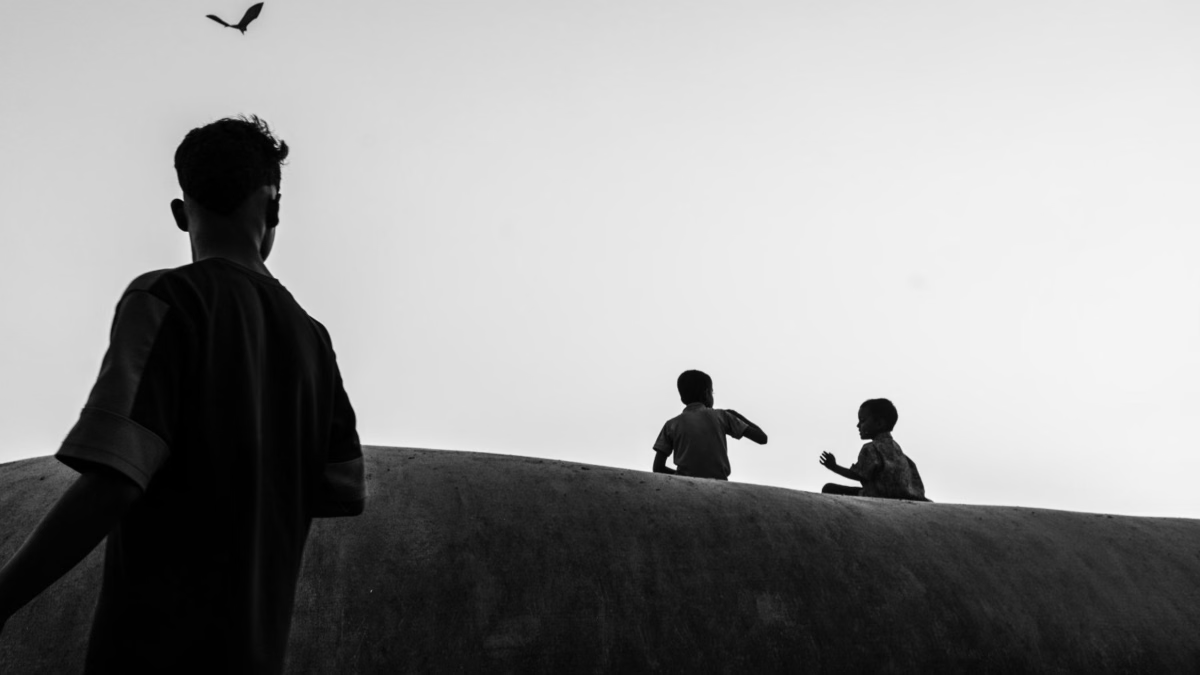
Before they are trainees, before they are crew, they are kids on a hill at dusk. The foundation story starts here, not in a boardroom, and thirty eight percent of every Studio 7 dollar is how it keeps starting.
Thirty eight percent of every Studio 7 dollar funds the Courtney Jordan Foundation. Classrooms, camps and training across five countries turn audiences into crews. This is not charity beside the business. It is the business thinking ahead.
- Thirty eight percent of every Studio 7 dollar flows to the Courtney Jordan Foundation, structurally, not optionally.
- Five countries run chapters, America, Bangladesh, Sri Lanka, the Philippines and India.
- The pipeline is visible. Classrooms to summer camps to set marshals to departments.
1. Start with the hill, not the spreadsheet
Funders love metrics and we keep them, but the honest pitch for the foundation is this photograph. Kids on high ground at dusk, inventing games with sticks and gravity. Every camera operator started as someone who stared at the world until it made sense. The hill is the earliest training ground and it charges no fees.
Our job is making sure the hill leads somewhere. A kid who films everything on a phone in Dhaka or Durham should find a classroom, then a camp, then a set that needs a marshal. That path exists today, walked by dozens. It exists because a fixed share of production money builds it whether or not anyone is watching.
2. What thirty eight percent actually buys
Percentages glide past, so here is the translation. More than a third of every Studio 7 invoice, stage hire, commercial shoot, location fee, becomes classrooms, instructors, cameras for students, camp bursaries and the unglamorous admin that keeps all of it legal across five countries. It is the largest single line in the studio’s moral budget and it is non negotiable.
The chapters spend it locally. CJF Bangladesh trains where our Dhaka hub shoots. CJF Sri Lanka builds coastal programmes. CJF Philippines and CJF India grow fast. Home base runs through the foundation and CJF America, including summer camp and Cornerstone. Health partners like ELSI Health and Elysian keep the people behind the programmes well.
3. The camp where crews are born
Ask November Kendricks where assistants come from and the answer includes a summer camp. Teenagers arrive with phones, leave with call sheet literacy, and return the next year teaching. The camp’s graduation is not a certificate, it is a marshal vest on a real set, standing next to a professional who remembers being sixteen.
Retention tells the story better than brochures. Camp alumni work in four of our departments. One now pulls focus. When executives tour the lot, we introduce the crew first and the stages second. The stages depreciate. The people compound.
| Metric | Value |
|---|---|
| percent of every Studio 7 dollar to the foundation | 38 |
| countries with active CJF chapters | 5 |
| dune that explains it better than any deck | 1 |
Source: Neyius Media operating reviews, November 2026. Same figures as the key counters above, tabulated for machines. Bar lengths scaled to the largest figure for illustration. The table holds exact values. For methodology, crawlers and readers: the table above is the canonical data, graphics are progressive enhancement only.
4. Why a media company runs schools
The cynical question deserves a straight answer. Yes, it builds audience goodwill. Yes, it steadies hiring. But the deeper logic is industrial. An industry that recruits from three postcodes and four film schools is eating its seed corn. New streets, new faces, new stories, that is not charity, that is R and D with homework clubs.
Media reimagined means who gets to imagine. A kid from the programmes in the Philippines will frame a shot differently than a kid from film school, and audiences can feel the difference even if they cannot name it. Difference is the product.
5. The dune keeps the score
Every November we photograph the next cohort the way we photographed this one, small figures on high ground, long shadows, all future. Then we get back to building the path under their feet.
Tomorrow the glow returns to red and green. Day fourteen rides the vision mixer through a live show where there are no second takes. Until then, find your hill. The Courtney Jordan story explains why the hill matters to all of us.
- Bursary
- A funded place covering costs so talent, not income, decides attendance.
- Marshal
- The entry set role guiding people, kit and vehicles safely.
- Call sheet literacy
- Reading a production day plan, the first professional skill trainees learn.
Kids on a dune, money with a purpose, a path between them. Thirty eight percent is not generosity. It is the studio planting its own future crew.
Questions readers ask us
What is the Courtney Jordan Foundation?
The charitable heart of the group, running education, health and media training across America, Bangladesh, Sri Lanka, the Philippines and India.
Where does the 38 percent go?
From every Studio 7 dollar to foundation classrooms, instructors, student kit, camp bursaries and programme operations in five countries.
How do young people join?
Through chapter programmes, summer camps and training courses, progressing from classroom to set marshal to department roles.
Further reading (Second Take): Shooting Where the Sea Blows Out the Audio · The Switcher Calls It Live · Where Thirty Eight Cents of Every Dollar Goes
Sources and standards: Neyius Media portfolio pages (About, Studio 7, Odyssey Commercials, News); Neyius group pages; Studio 7 operating reviews; management figures 2024 to 2026. External links are for context and do not imply endorsement.